Choosing between Val d’Isère and Val Thorens is one of those decisions that sounds simple until you actually start looking into it. Both are among the best-known ski resorts in the French Alps. Both offer outstanding skiing. And both attract skiers from all over the world each winter.
But once you get past the headline similarities, they feel quite different on the ground. Val d’Isère leans into its history, with a proper alpine village feel and some famously demanding terrain. Val Thorens, on the other hand, sits high up in the mountains with huge ski access and some of the most reliable snow you’ll find anywhere in Europe.
If you’re weighing up the two, this guide looks at how they compare, from the skiing itself to the atmosphere, après-ski and which type of trip each resort suits best.
Table of Contents
Quick comparison: Val d’Isère vs Val Thorens
| Feature | Val d’Isère | Val Thorens |
|---|---|---|
| Ski area | Espace Killy (with Tignes) | Three Valleys |
| Rebort altitude | 1,850m | 2,300m |
| Ski terrain | Challenging and varied | Wide, high-altitude slopes |
| Atmosphere | Traditional alpine village | Modern purpose-built resort |
| Après-ski | Stylish and lively | Energetic and party-focused |
| Best for | Experienced skiers, repeat visitors | Groups, intermediates, snow reliability |
If you’re considering either resort, you can explore Ski Beat’s catered chalet holidays in Val d’Isère or browse options in Val Thorens.
Resort overview: Val d’Isère
Want to learn more about Val d’Isère? Read our comprehensive Val d’Isère ski resort guide to exploring everything from travel, terrain, activities and much more.
Val d’Isère is often described as one of the great ski resorts of the Alps, and it’s easy to see why. Set in the Tarentaise Valley, it combines high-quality skiing with the feel of a traditional mountain village.
The architecture leans heavily on wood and stone, with older farmhouses sitting alongside hotels and chalets. It feels established and well-rooted, rather than built purely for skiing.
Together with nearby Tignes, it forms the Espace Killy ski area, offering around 300km of pistes and a wide mix of terrain.
The resort has a strong reputation among experienced skiers, thanks to its more technical runs and off-piste opportunities. At the same time, there’s plenty going on off the slopes, good restaurants, busy bars and a steady buzz in the evenings.
If chalet accommodation is what you’re after, you can browse Ski Beat’s Ski Beat’s Val d’Isère ski holidays to find the perfect home from home to relax after a day enjoying the slopes.
Resort overview: Val Thorens
Want to learn more about Val Thorens? Read our comprehensive Val Thorens ski resort guide to exploring everything from travel, terrain, activities and much more.
Val Thorens takes a different approach entirely. Sitting at 2,300 metres, it’s the highest ski resort in Europe, which gives it a clear advantage when it comes to snow conditions.
Unlike Val d’Isère, it was purpose-built, and that shows in how practical it is. Many places offer ski-in ski-out access, lifts are close by, and getting onto the slopes tends to be straightforward.
It’s also part of the Three Valleys, widely regarded as the largest interconnected ski area in the world, so the amount of terrain available is huge.
The combination of easy access to skiing, high altitude and a lively social scene makes it especially popular with groups and younger skiers.
You can explore chalet options and packages in Val Thorens with Ski Beat.
Skiing and snow conditions
For most people, this is where the decision really comes down.
Skiing in Val d’Isère
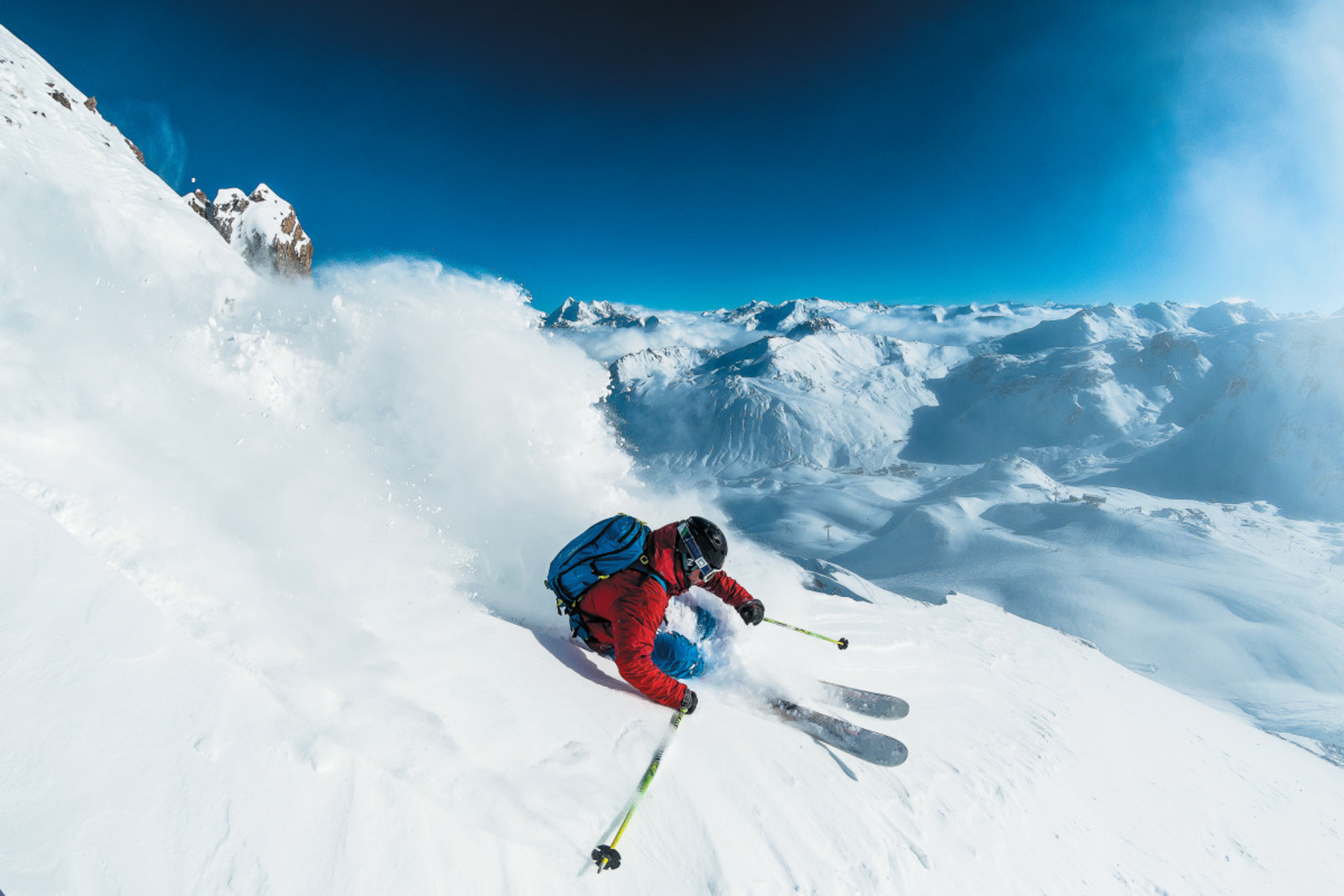
Val d’Isère offers some of the most varied terrain in the Alps. The Espace Killy area gives you around 300km of pistes, along with extensive off-piste routes.
The skiing here can feel more technical. Advanced skiers often head straight for the Face de Bellevarde, an Olympic downhill run that’s as demanding as it is well-known.
Intermediates are well catered for too, with long red runs and plenty of variety across both Val d’Isère and Tignes.
Skiing in Val Thorens
Higher resorts tend to perform better later in the season. Look at base village altitude and the height of the ski area’s upper lifts.
Val Thorens sits within the Three Valleys, alongside resorts like Méribel and Courchevel.
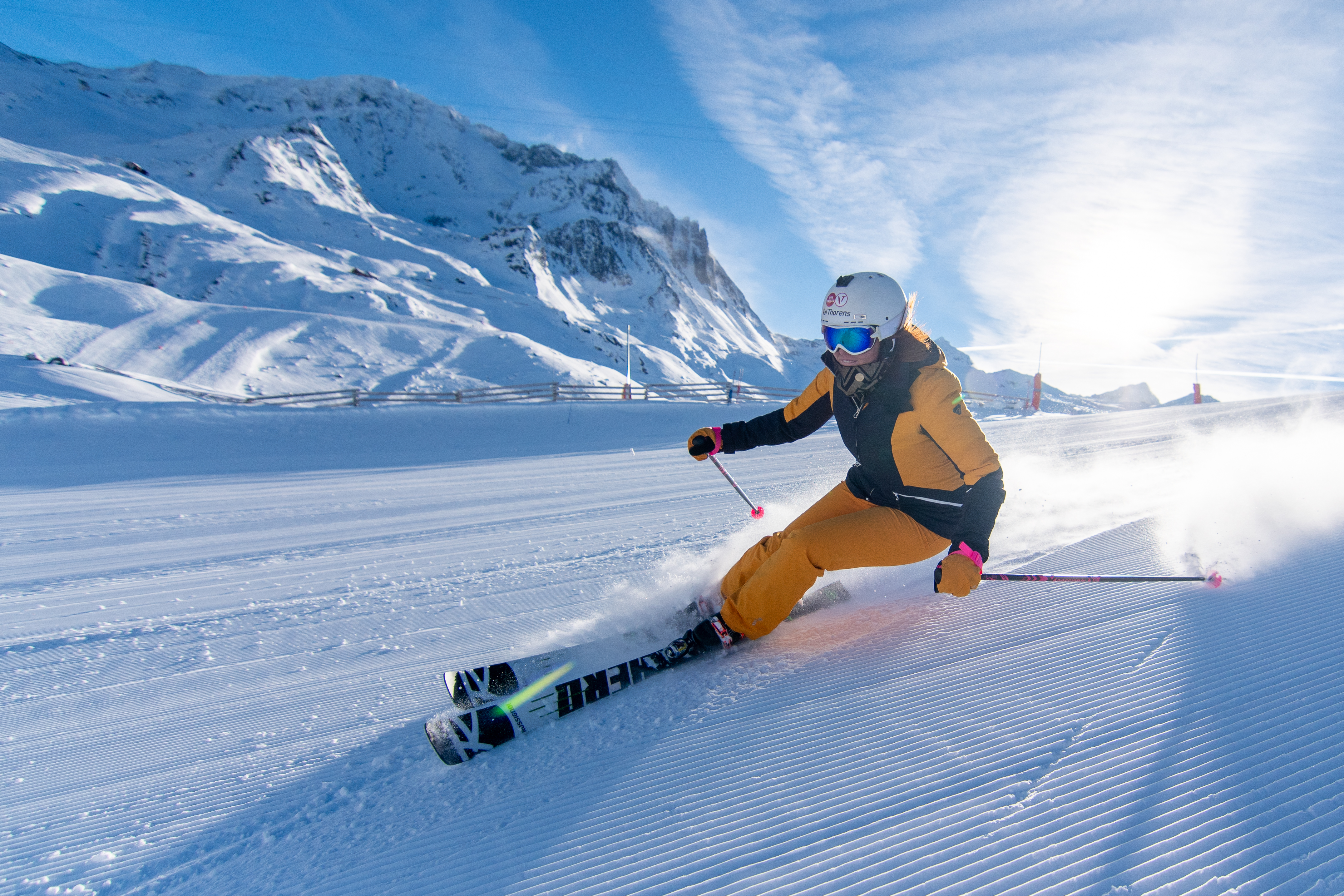
From here, you can access a vast network of slopes. The pistes tend to be wide and open, which makes them particularly appealing for intermediates who want to cover a lot of ground.
Because of the altitude, conditions are usually consistent throughout the season.
Altitude and snow reliability
If snow reliability is high on your list, Val Thorens has a slight edge.
At 2,300 metres, with skiing extending higher still, it’s one of the most snow-sure resorts in Europe.
That said, Val d’Isère is hardly lacking. The village sits at 1,850 metres, and the ski area reaches above 3,000 metres.
In reality, both resorts offer strong snow conditions for most of the winter.
Atmosphere and village character
This is where the two really start to feel different.
Val d’Isère
Val d’Isère has the feel of a traditional Alpine village. Wooden chalets, cosy bars and well-established restaurants give it a more classic atmosphere.
It tends to attract returning visitors, and there’s a sense of familiarity to the place. Evenings often revolve around good food, wine and a mix of relaxed and lively spots.
Val Thorens
Val Thorens is more modern and more compact. Everything is built around convenience, accommodation, lifts and nightlife all within easy reach.
It has a reputation for being energetic and social, which is a big part of its appeal, particularly for groups.
Après-ski and nightlife
Both resorts take après-ski seriously, just in slightly different ways.
Val d’Isère
Val d’Isère is known for a more polished après scene. Places like La Folie Douce and Cocorico draw crowds in the afternoon, with music, drinks and a lively atmosphere.
In the evening, things shift towards restaurants and cocktail bars around the village.
Val Thorens
Val Thorens leans more into high-energy après. Spots like Folie Douce and the 360 Bar Val Thorens are known for music, dancing and packed terraces.
The nightlife carries on well into the evening, with plenty of bars and clubs across the resort.
Skiing experiences: Val d’Isère vs Val Thorens
Both have ski schools and beginner-friendly areas, but Val Thorens is often the easier starting point.
There are several gentle slopes close to the centre, so beginners don’t need to travel far to practise.
Val d’Isère does cater for beginners, though the overall terrain can feel slightly more challenging.
Which resort is better for intermediate skiers?
Intermediates are well served in both resorts.
Val Thorens stands out for its wide, open runs and the ability to explore large parts of the Three Valleys with confidence.
Val d’Isère also offers excellent intermediate skiing, though often with steeper gradients and more variation.
Which resort is better for advanced skiers?
For more experienced skiers, Val d’Isère often comes out ahead.
It’s known for its steeper pistes, technical runs and strong off-piste offering. If you’re looking for more demanding terrain, it tends to deliver.
Accommodation and chalet holidays
Both resorts offer a wide mix of accommodation, from hotels to catered chalets.
Ski Beat focuses on chalet holidays that combine comfortable stays with convenient access to the slopes.
If you’re planning a trip, you can browse catered chalets in Val d’Isère or explore options in Val Thorens to find a comfortable chalet or hotel that caters to your group’s needs.
Travel and accessibility
Both resorts are typically accessed via Lyon Airport, with transfer times of around three and a half to four hours depending on traffic and weather.
Val Thorens sits slightly higher, so the final stretch involves a longer climb into the mountains.
Val d’Isère also requires a mountain transfer, but access is broadly similar.
Which resort is better overall?
There isn’t a single answer, it really depends on what you want from your trip.
Val d’Isère tends to suit those looking for a more traditional alpine setting, with challenging skiing and a well-established resort feel.
Val Thorens is often the better fit if snow reliability is a priority, you want access to a vast ski area, or you’re travelling with a group and want a livelier atmosphere.
Frequently asked questions
Is Val Thorens higher than Val d’Isère?
Yes, Val Thorens sits at around 2,300 metres, making it the highest ski resort in Europe.
Is Val d’Isère good for beginners?
It does have beginner areas and ski schools, though it’s generally better suited to intermediate and advanced skiers.
Which resort has better snow?
Both are reliable, but Val Thorens benefits from its higher altitude.
Which resort has better après-ski?
Both are strong, Val Thorens is more energetic, while Val d’Isère is slightly more refined.
Planning your ski holiday
Val d’Isère and Val Thorens both rank among the top ski resorts in the Alps, each offering a different take on the ski holiday experience.
Your choice comes down to what matters most, the style of skiing, the feel of the resort, and how you want your time off the slopes to look.
To start planning, take a look at Ski Beat’s catered chalet holidays in Val d’Isère or browse options in Val Thorens and find the resort that fits your kind of trip.