Late season skiing is often misunderstood. Many skiers assume that once February ends, snow quality drops away quickly. In reality, some of the most dependable snow of the entire season can be found in March and April, provided the resort is right. This guide explains how late season snow works, why some resorts hold conditions far better than others, and where to ski if snow reliability matters more than peak-season buzz.
What Counts as Late Season Skiing?
Late season skiing usually refers to trips taken from early March through April. In high-altitude Alpine resorts, skiing often continues beyond this point.
By March, most resorts rely less on fresh snowfall and more on the depth of snow built up over winter. Cold overnight temperatures at altitude help preserve this base, keeping pistes in good condition well into spring.
Late season skiing focuses on snowpack strength, altitude and terrain, rather than chasing regular storms.

What Makes a Resort Reliable Late in the Season?
Some resorts consistently deliver better late season conditions than others. Geography plays the biggest role.
Altitude
Resorts with large areas above 2,000 metres stay colder for longer. Snow melts more slowly, and overnight refreezing remains consistent.
Glacier terrain
Glacier skiing offers the strongest late season reliability. Snow remains cold and compact even as temperatures rise elsewhere.
Slope orientation
North-facing slopes receive less direct sun, helping snow hold its shape and quality through the day.
Size and layout
Large ski areas allow skiers to follow the best conditions, starting higher in the morning and moving to shaded terrain later on.
Skiing in March compared to April
March skiing conditions
March is one of the most reliable months for skiing:
- - Snow depth remains strong
- - Cold nights are still common at altitude
- - Daylight increases
- - Crowds reduce after February holidays
For many skiers, March offers winter-like conditions with a calmer atmosphere.
April conditions
April skiing depends more on resort choice:
- - High-altitude and glacier resorts remain reliable
- - Snow quality is best earlier in the day
- - Lower slopes may close as temperatures rise
April suits skiers who enjoy sunshine and relaxed skiing, particularly in resorts designed to operate late into the season.
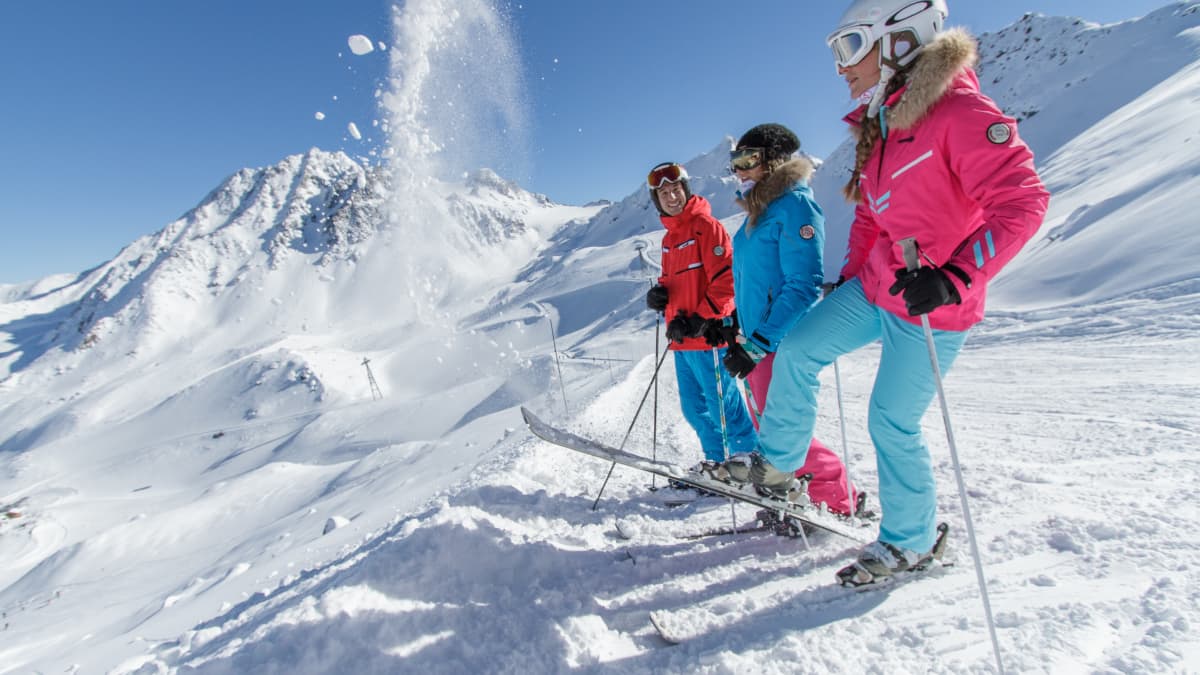
Ski Beat Resorts Known for Late Season Snow
Several Ski Beat resorts are particularly well suited to late season skiing due to their altitude, terrain and snow record.
Val Thorens
Val Thorens is the highest ski resort in Europe, with most skiing taking place well above 2,300 metres. Its altitude and extensive high-level terrain make it one of the most dependable options for late season snow. Conditions in March and April are often excellent, especially in the mornings.
Val D’Isere & Tignes
Val D'Isere & Tignes combine a high village altitude with access to the Grande Motte glacier. This makes it one of the most reliable resorts in the Alps for late season skiing. Snow coverage remains strong throughout spring, and glacier skiing extends the season well beyond April.
Les Arcs
Les Arcs offers a wide altitude range and large areas of north-facing terrain. Higher villages such as Arc 2000 hold snow particularly well late in the season. Its size allows skiers to find good conditions throughout the day as temperatures change.
La Plagne
La Plagne's high-altitude villages and glacier access support reliable spring skiing. The resort’s varied terrain helps preserve snow into April, especially on higher and shaded slopes.

Late season snow by Alpine Region
High alpine resorts
Resorts such as Val Thorens, Val D’Isere & Tignes and La Plagne benefit from extensive terrain above 2,500 metres. These areas retain snow long after lower resorts begin to struggle.
Glacier areas
Val D’Isere & Tignes stand out for glacier skiing, offering some of the most consistent late season conditions available.
Large linked ski areas
Les Arcs forms part of a large ski domain, providing flexibility across altitude and aspect. This variety helps maintain skiable conditions throughout spring.
Comparing late season snow reliability
When choosing a late season resort, look for a combination of the following:
| Factor | Why it helps |
|---|---|
| High top altitude | Slower snow loss |
| Glacier access | Cold snow surface |
| North-facing terrain | Reduced sun exposure |
| Large ski area | More choice as conditions shift |
| Proven spring operations | Resorts designed to stay open |
Val Thorens and Val D’Isere & Tignes tick nearly every box, with Les Arcs and La Plagne offering strong late season performance through size and altitude.
Is late season skiing worth it?
For many skiers, late season trips deliver some of the most enjoyable skiing of the year. Slopes are quieter, daylight is longer, and snow conditions at altitude remain reliable. Spring skiing tends to be predictable rather than changeable.
Softer snow later in the day and reduced access to lower runs are part of the trade-off. Choosing the right resort makes the difference between average conditions and excellent ones.
Planning a Late Season Ski Trip?
Late season skiing rewards careful planning. Altitude, terrain and resort design matter more than brand reputation.
Morning skiing offers the best conditions, especially in April. Resorts such as Val Thorens, Val D’Isere & Tignes are built for extended seasons and remain dependable long after winter’s busiest weeks.
Late season snow is not a risk when the right resort is chosen. In many cases, skiing in March and April offers better visibility, fewer crowds and snow conditions that rival mid-winter.